

Transforming a complex legal process into a humane journey for people in vulnerable situations.

Context
In Québec, the assistance measure (formerly tied to guardianship) allows an adult with diminished capacity to designate a trusted person to help with personal, medical, or financial decisions, without losing legal capacity.
Cognitive and legal accessibility: forms and procedures were perceived as opaque, lengthy, and intimidating — especially for elderly people or those with cognitive disabilities.

Methodology
- Co-design with stakeholders
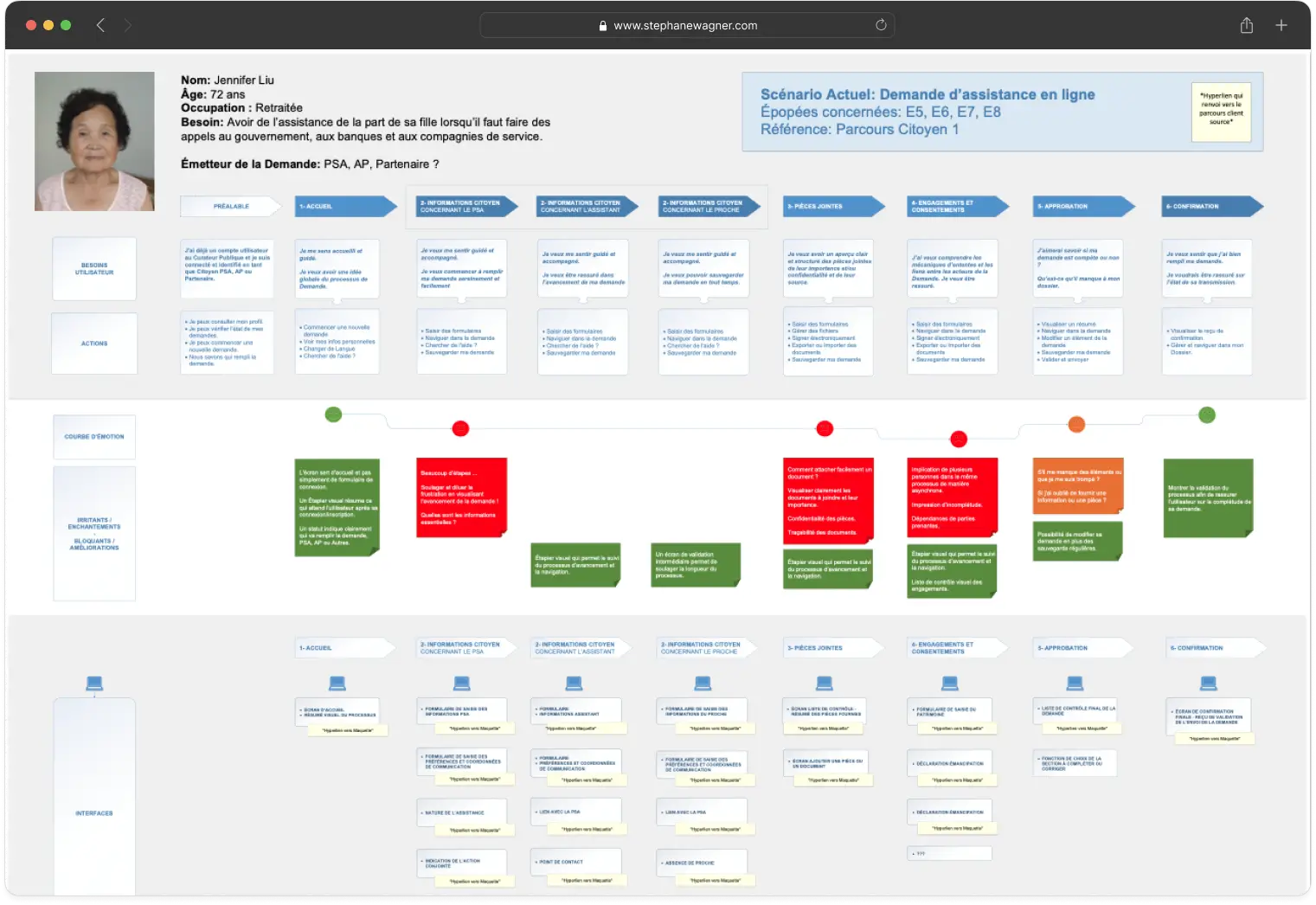
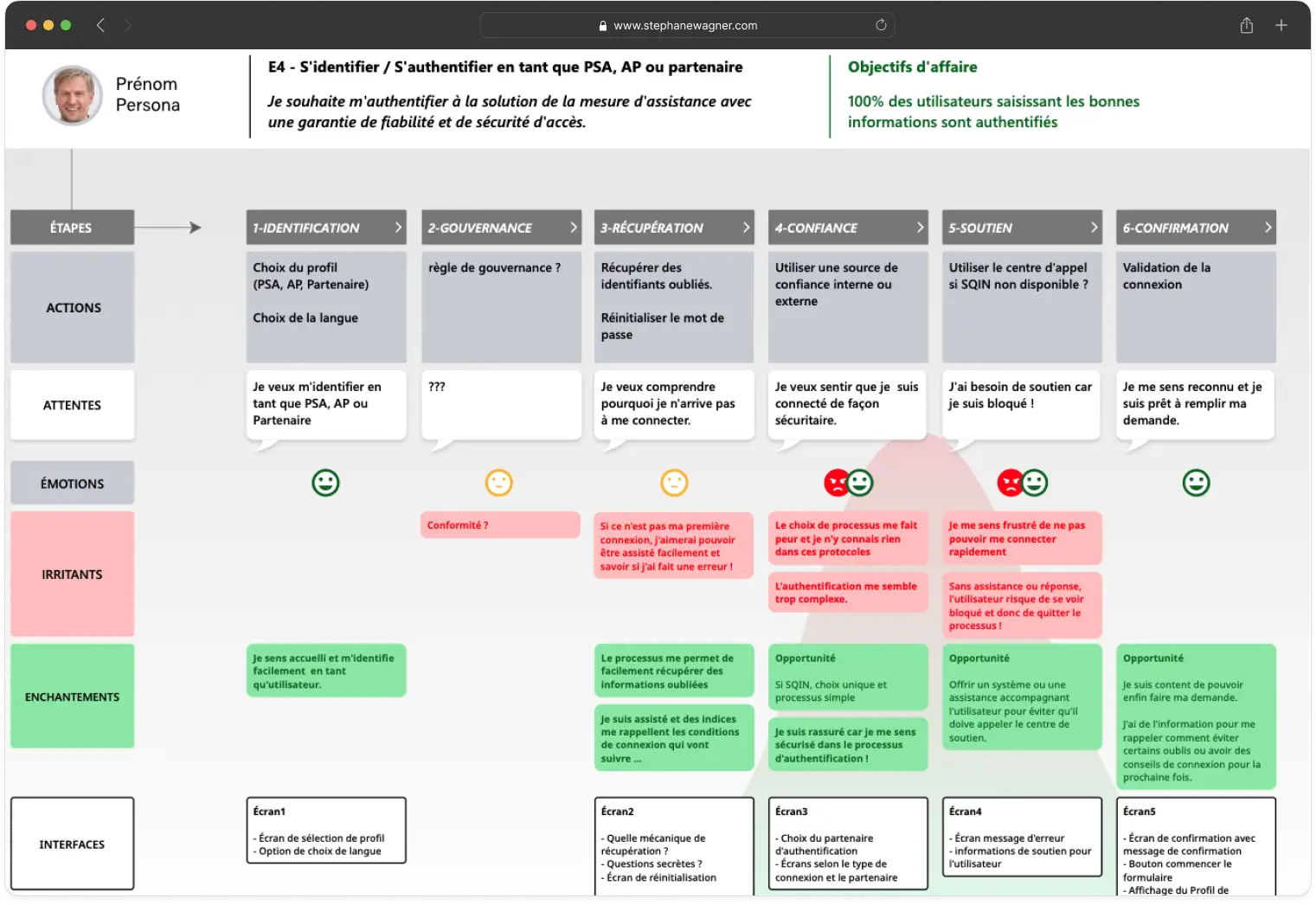
- Test scenarios and usage journey mapping
- Agile approach with the development team
- High-fidelity prototypes and design system


Deliverables
- UX guidelines and best practices companion guide
- Design system contributing to the Quebec.ca system
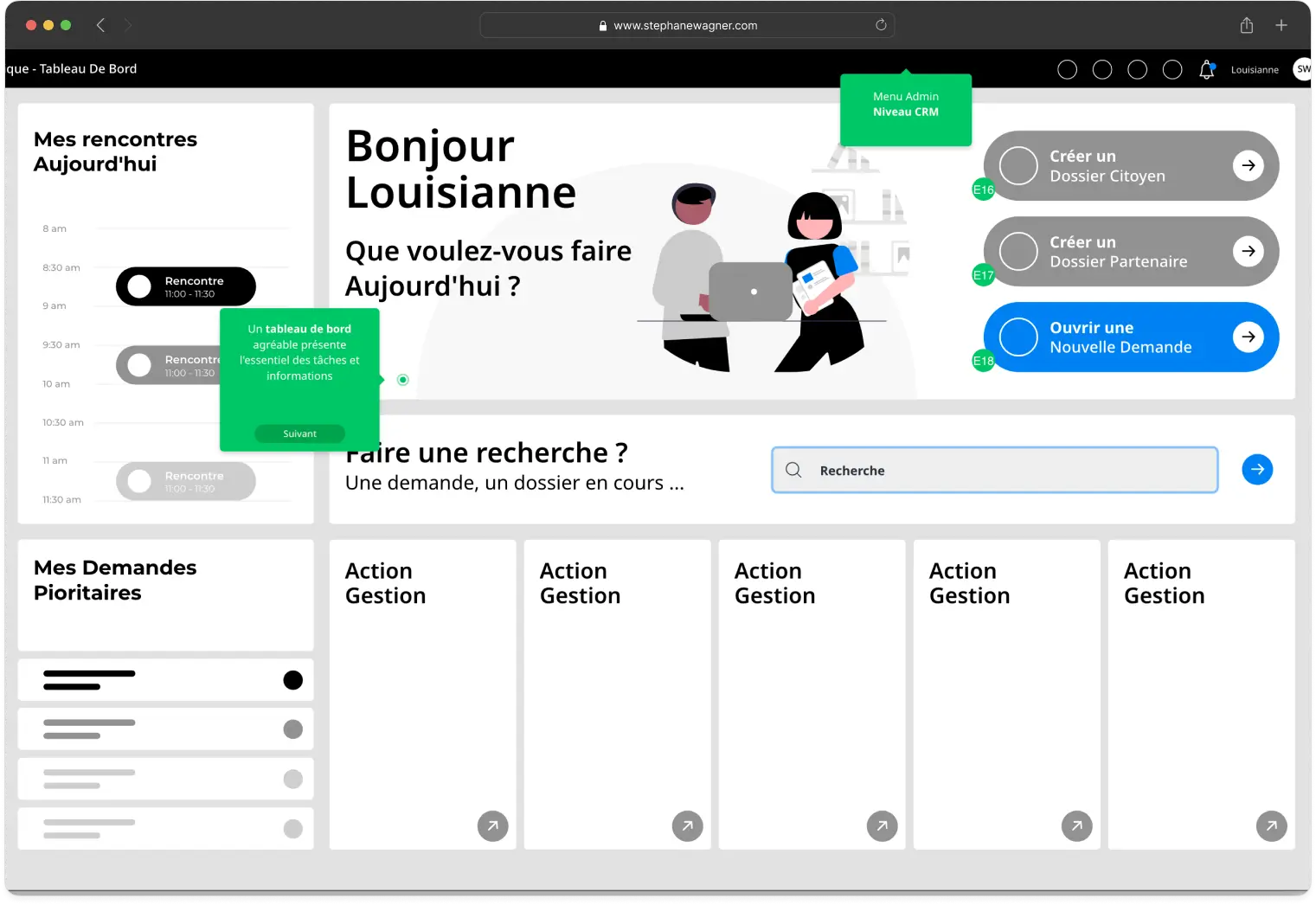
- Prototypes and wireframes: interactive mockups for the one-stop portal and forms
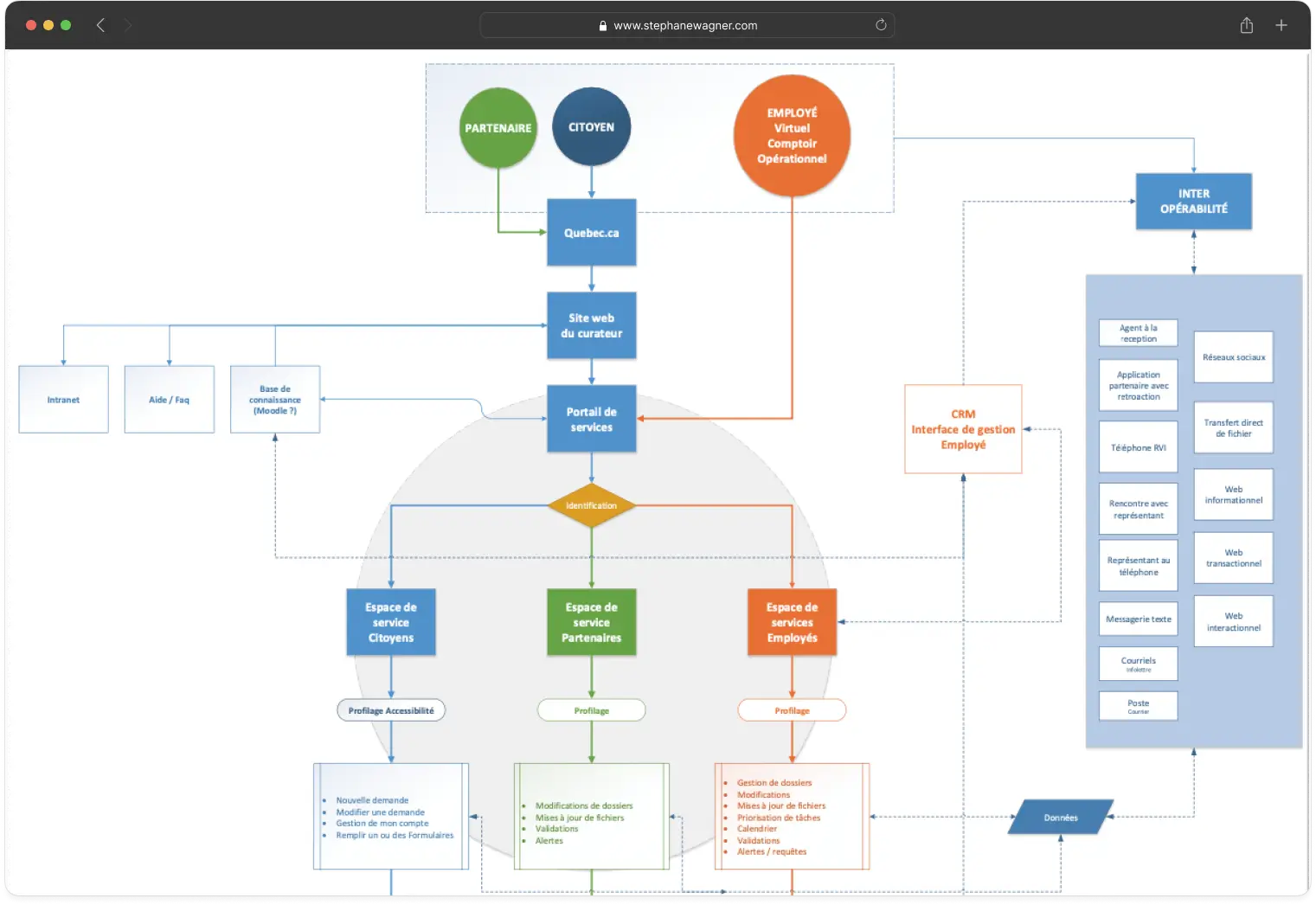
- Scenarios and ecosystem maps

Results
- A unified, omnichannel service for citizens, employees, and public service agents
- Acting as a key player in the UX evangelization and user-centred design process

Main challenges encountered:
- Legal constraints: balancing simplicity with legal compliance (e.g. electronic signatures, identity verification)
- Organizational inertia toward digitalization within a siloed government structure
Visuals
Approche
Des compétences multiples en synergie
L'intersection de ces trois disciplines — visualisation, rédaction et scénarisation — permet de concevoir des expériences qui rendent l'information complexe accessible et actionnable.